The blog is moving! I am combining it with my podcast all under the name "Twelve Enough" - Theological Snob can now be found at: www.twelveenough.com/blog
same wry wit - just a different place
Monday, November 17, 2014


Monday, October 27, 2014
Worlds of Faith
A Review/Reflection of A Tree Grows in Brooklyn by Betty Smith
Devotees of Science Fiction and Fantasy
writing understand the importance of world building. With literature of that
genre there is an implicate agreement between the reader and the author that
the context of the book is not one in which the reader lives in. Gravity will
be different, dogs rule the world, all horses speak out of their… ears, the sky
is green and the grass is blue, and on and on. The world is going to be
different that the ordinary, everyday world that we muggles slough through on a
daily basis. Thus there is a degree of world building with these stories. The
author has to build the world, and then figure out how to share the rules, the
physics, the creatures, and all other aspects that might be different from what
the reader normally expects. Whether it be the giant turtle of DiscWorld, or the geography of the Fire and Ice saga, or the difference
between Dwarves and Elves of Middle Earth (from Lord of the Rings for the 1% of the country that has never
encountered that masterpiece… shame on you), or the role of magic in the realm
of Xanth, the reader needs to learn
how the world works, what it means to live in that world, and the ways in which
the story needs to fit in and will be guided by that world.
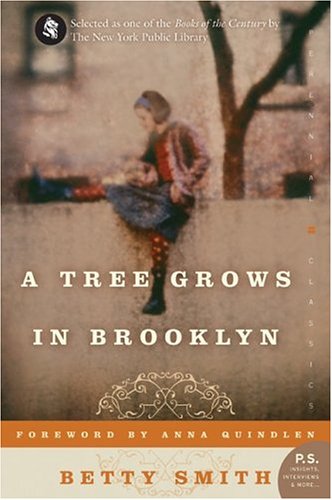
While it is
a far cry from Science Fiction or Fantasy writing, I would argue that Betty
Smith’s book, A Tree Grows in Brooklyn
brilliantly does a similar thing – it creates a world. Yet in this case the
world in question is Brooklyn in the early 1900s. It would have been
interesting and slightly humorous if the book was actually about Gary, Indiana with
the title, A Tree Grows in Brooklyn,
but alas, Smith does not carry such humorous sensibilities with her work.
Perhaps in person she was a real card and cut-up, but not in writing.
Regardless, it is great work speaking to the experience of life in Brooklyn in
the first two decades of the 20th century. Or better said, it is a
world that is carefully, and painstakingly built for the reader Brooklyn in the
early 1900s. We do not get the historical or geographical context in broad
strokes, but instead in depth and brilliance of color. World events like World
War I or the influenza of 1918 are mentioned in the work, but they are
ancillary, secondary to the experience of Brooklyn. We get a dot, a point in
the picture, but that point is described with such detail and care that the
reader can from there place the life and experience of living in Brooklyn in
the larger context of the American experience. It is a thick description (to
borrow the term from the late ethnographer and anthropologist Clifford Geertz)
of a place and a time that is told with such care and delicacy that it feels
like unwrapping a gift one fold of wrapping paper at a time. It is not a
plot-driven work, but instead one that is centered on the experience of living
and being in a certain point and time. It is over 400 pages of world building
and it is beautifully and masterfully done.
Because the work is focused with such detail on the experiences
of the main character Francie Nolan and her family, there are many moments that
one can call on for comment. For this post I would like to lift up one particular
event; when Francie and her family is at a Catholic Mass to remember her
recently deceased father. While watching and listening to the singing and the
speaking of the Latin Mass, Francie has a revelation:
“Francie believed with
all her heart that the altar was Calvary and that again Jesus was offered up as
a sacrifice. As she listened to the consecrations, one for His Body and one for
His Blood, she believed that the words of the priest were a sword which
mystically separated the Blood from the Body. And she knew, without knowing how
to explain why, that Jesus was entirely present, Body, Blood, Soul, and
Divinity in the wine in the golden chalice and in the bread on the golden
plate.”
Before I go
any further I should speak to the deep sense of sacramentality that is being
described here. My Catholic readers (do I have any Catholic readers?) will pick
up on this right away perhaps without even realizing it. Those born before Vatican
II, who were raised reading and learning the Baltimore Catechism will likely be
able to connect with this experience more than those born after 1962. To my
Protestant readers who do not have a heightened sensitivity for a sense of
mystery in worship (i.e. sacramentiality), try for a moment to suspend all the
skepticism and doubt and uncertainty that comes out of your reactionary
response to Medieval Catholicism and imagine what it might be like for a 14
year old girl to experience a Latin Mass. It is mysterious. Note what Francie
thinks next:
“‘It’s a beautiful religion,” she
mused, “and I wish I understood it more. No. I don’t want to understand it all.
It’s beautiful because it’s always a mystery, like God Himself is a mystery.
Sometimes I say I don’t believe in God. But I only say that when I’m mad at
Him… Because I do! I do! I believe in God and Jesus and Mary.’”
As a life-long Protestant (and a Baptist at that), I would
leave out the “Mary” part, but that is not the point. Francie feels the pull
between the desire to know and the realization that not knowing deepens the
beauty of the moment. “It’s beautiful because it’s always a mystery…” To
understand everything is to lose something, but to hold to that place of
unknowing is to have a place where the beautiful can enter in. This is a
sensibility that Smith brings to the entire work. She offers great detail, great
depth, but stops at the moment when the mystery needs to remain and does not
explain everything away. For example, Francie loves hearing her father sing as
he comes home late at night. We don’t need to know why, just that it is
profound and powerful. The reader is called to rest in the mystery and in that
find the beauty. The book is replete with moments of beauty and mystery;
moments profound and simple.
In many ways faith is about world-building. We are not
creating the world we live in, but offering explanations and descriptions for
why the world is as it is. We start with certain assumptions and shared beliefs
like the belief in the existence of God and that this God is love. Such a
assumption shapes our view and experience of the world. From there we try to
make sense of our experiences, we try to explain the dissonances, and we try to
understand the world in which we dwell based on those assumptions. Augustine
almost has a nervous breakdown trying to understand how there can be evil in
the world when all is created by God and when God is believed to be good. As a
theologian and as a pastor I try to offer an understanding of evil that fits
within the world of faith that we have embraced. I try to suggest ways to read
scripture that make sense with the particular individual. Churches try to offer
ways of seeing and living in the world that conform with a certain
understanding of faith. This is world building, but can be taken too far. We
all run the risk of explaining too much, of trying to make too much sense in
the world, and losing the beauty and the mystery. “It’s beautiful because it’s
always a mystery.” One of the lessons that I have pulled from this work is that
there is a point when you need to stay in the mystery. We want to have rational
and explanation, but only to a point. There comes a point when we need to fall
into the mystery of creation, of faith, of hope, and of love. There is a beauty
to the mystery in our rituals (like why the sermon takes so stickin’ long), our
prayers, our scripture, and our lives. Explaining away the mystery leads to a
militant, dogmatic faith that demands that one fully believes every little
thing that is said and explained. This is a kind of religion that usually harms
people, that fears questions and curiosity, and that has no sense of play in
the world. There is no mystery in this kind of faith. A faith that holds the
beauty of the mystery is a faith that falls into the space where reason and
mystery meet.
One of the great things about A Tree Grows in Brooklyn is that the mystery is shown to be in the
mundane. The act of making a tin can bank, the purchasing of meat, listening to
parents talk late into the night, and many other examples in the book can be
seen as small, simple, and ordinary. Yet the way Betty Smith describes them,
the world she creates around them, draws the reader into the mystery and the
beauty of each moment.
Those moments of mystical beauty in the arena of faith will
most likely be ordinary, simple, and mundane. Yet we are again and again called
to notice the beauty in those moments and recognize the presence of the divine
in the unexplained mystery.
Monday, October 06, 2014
The Most Powerful Book in the Universe!
“If this weapon were to ever get
into the wrong hands it could be destruction for us all.”
I love that line. It is one of
those lines that you wait to hear whenever you are watching an action,
adventure, spy, aliens, kind of move. It is a line that sets up the conflict
and the importance of the movie. It is most often a forced and contrived line
and I love it when I hear it. I have a dream that in one movie a character
holds up something and the camera zooms in. You see the character holding
nothing less than the Holy Bible hear him or her say “if this ends up in the
wrong hands it could be the end for us all!”
The point is that the Bible can be
a very dangerous book. It can be seen by many as a dangerous weapon that in the
wrong hands can be destructive to the reader and to many others as history has
demonstrated multiple times.
The Bible is at best a tricky book
to read. It has been the source of inspiration of bigotry, prejudice, war,
greed, racism, oppression, and poor decorating tastes. It is a book that has
been used to push segregation, capitalism (for better or worse), socialism
(again for better or worse), monarchism, patriarchies, and being just plain
mean; known by scholars as “meanism or jerkism.” In the wrong hands, read the
wrong way, the Bible can be a book that can lead to sorrow and suffering. In
the wrong hands the Bible can be a dangerous book.
Yet it also has the potential to
be a powerful book of life, hope, and freedom. Just as many who have used the
Scriptures to justify so much pain and sorrow, many more have found
justification a foundation for helping people in need, people who are hurting,
and people who are at risk of being forgotten. The Bible need not be a negative
book.
A large part of the challenge and
the difficulty is in how we read the Bible. Many of the negative, dangerous,
and oppressive interpretations of scripture comes out of a literal reading of
the text, and usually it is the King James Version of the text that is being
read in that hyper-literalist way (hooray for the critical-literal method gone
awry!). In my humble opinion (hah!), I believe this is a close-minded way of
approaching the Bible that is not open to the continued movement of the Holy
Spirit. Peter Gomes writes in his work TheGood Book that the Bible is a living, dynamic, alive work pulling us into a
faith that has offered life and hope and liberation to multitudes. The Baptist
preacher and scholar Ralph Elliot writes that the word of God is a witness to
faith. The Bible is a witness to a people encountering and trying to understand
their relationship with God. It is alive, dynamic, and needs to be read with an
ear for how God is continuing to speak.
I am not saying there is one right
way to read the Bible (but there are definitely wrong ways). It is a complex
text that cannot be read with a monolithic lens and each person needs to
discern they ways to read the Bible that leads them to engage the divine
through the text. What I am saying is that the Bible should not be read alone.
It is when someone reads the Bible alone that one often comes to dangerous and
harmful interpretations. The community can serve as a corrective, as a guide,
and as a support to one who is listening for God’s eternal word. That is why we
need a faith community and why we all should be going to church. Yup, you
should feel a little guilty right now, because outside of the church you do not
have the witness of others to lead upon as you strive to engage and understand
this complex and often confusing book. Inside a church it is too dark to read
(thanks Groucho Marx).
The Bible need not and should not
be a weapon. It can and should be a guide, a star, a testimony, and a comfort.
But in the wrong hands, read in the wrong way it can be damaging to many. In
closing, I would like to offer nine “thesis” of reading the Bible from The Art of Reading Scripture edited by
Ellen Davis and Richard B. Hays:
1.
The Bible tells God’s story of creating,
judging, and saving the world
2.
The Bible is a coherent dramatic narrative
3.
The Bible requires engagement with the entire
narrative
4.
To read the Bible on must use multiple, complex
senses just as scripture reflects multiple, complex senses
5.
The Gospels narrate the truth about Jesus
6.
The Bible invites and presupposes participation
in the community/church
7.
The “Saints” of the church (the leaders and
pillars of the community) provide guidance in interpretation
8.
Christians need to read the Bible in dialogue
with diverse people outside the church
9.
The Bible calls us to ongoing discernment and a
fresh reading again and again in light of the Holy Spirit’s work in the world
I should say that this is not a quoted list, but paraphrased
– you get the idea. In case you don’t get the idea, the idea is that the Bible
something that pulls us into a faith that is not static, but moving and pulling
us to a deeper relationship with God. Read your Bible, but only with others and
always open to the movement of God’s inspiration through the Holy Spirit. And
remember this simple rule: if your
interpretation leads you exclude, hurt, or dismiss others than maybe it is a
misguided interpretation.
Monday, September 22, 2014
A Political Devotional

There are a number of things that I try to avoid with church
work. On the top of my list are things like craft shows, ice cream socials, and
politics. The first two are simply due to a strong and well-reasoned fear of
glitter and an intolerance of lactose; I do not have any theological issues or ethical
problems with craft shows or ice cream socials. The third, however, is because
of the ethical and theological quandary that accompanies any conversation
having to do with politics in the context of the church. As a culture we have
tried to separate religion and politics. As a pastor I have tried to stay away
from the merging and mixing of the two.
Yet to claim to be devoid of politics
in the religious sphere is disingenuous; religion is, by nature, political and
speaks to the current political context in one way or another. At one level or
another to read scripture, to pray, or to attend and participate in worship is
a political act.
First, consider the notion that politics is about the ways
in which one relates to people and is about the practice and theory of
influencing people on a global, civic, and individual level (thank you Wikipedia).
Because of our disestablishment heritage made concrete in the First Amendment,
one aspect of the discourse of American politics has moved to a place where
politics claims to be devoid of religion, and many wussy religious leaders
(myself included) strive to claim that religion is devoid of politics. We claim
that religion has no place in politics and politics has no place in religion.
Yet religion is about influencing people on a global, civic, and individual
level. When I preach I am trying to persuade people to aspire to a certain way
of living and a certain way of being in relationships with other people. In
Christianity we tend to embrace an ethic that calls us to treat people a
certain way (mostly nicely) and to take care of people who are in need
(mostly). Such an ethic speaks to an idea of how the world is supposed to be; a
place where everyone is mostly nice to each other and were we mostly take care
of people in need. It may be watered-down, but this is a political ethic.
Perhaps one cannot so easily separate one from the other.
It is not difficult to push a little bit and see those
moments when Christianity was overtly political. The roots of Christianity, the
purity laws (as well as others) found in the Hebrew Scriptures (or the Old
Testament for you close-minded folks) are political in the way they guide
people’s lives. The vice and virtue lists in the letters of Paul and in the
Pastoral Letters are intended to shape and mold the behaviors and relationships
of a nascent community. Kinda political when you think about it. In the
Medieval era the church and the state were closely inter-twined leading to the
notion of divine mandate suggesting that kings were the spokespersons of God
and of Cardinals and Popes wielding real political power. That didn’t go well
when some kings believed that their divine mandate empowered them to go against
the current teachings of the church and trying to do crazy things like divorce
their wives (I’m looking at you, Henry). Others, like John Calvin, Ludwich
Zwingli, and folks who came after them (I’m looking at you and your Puritan ilk,
John Winthrop) believed that government needed to be led by religious people
who were right with God in faith and action. We have a history of a close and
at times messy relationship of religion and politics.
But we have tried to pull the two apart. Part of the radical
nature of the great experiment of religious liberty (a nod to William Penn and
Roger Williams) was to suggest that the government would not have a religious
bias. Because of experiences in England and in Colonial America, people here in
the United States thought it might be a good idea to try having a government
that was guided by reason, rational, and human decency, but not by a specific
branch of any faith tradition. Thank goodness for prevalent preaching of secular
humanism and the optimistic hope in humanity to undergird such a notion (sarcasm?).
People could be trusted to do the right thing because people are generally
reasonable even if they are Quakers or Methodists, or dare I suggest, Baptists!
In time the notion emerged and took hold that one’s faith need not be a
dominant aspect of one’s political life and that it is best to keep God out of
politics. An individual piety emerged and a social conscious diminished.
Note: I realize that I
am glossing over large swaths of American religious and civic history. The
abolitionist movement, the temperance movement, the civil rights movement, the
Religious Right of the 1980s are all examples of Christian political action.
The point is there has been a thread in our narrative that looks to keep
religion and politics separate.
Yet I contend that
religion is to a degree political and will continue to be political and there
will continue to be a strain and tension between the relationship of religion
and politics.
Some say it is important and appropriate for churches to be
engaged and involved in political processes. There are times when injustice is
so great that to stay silent is in itself a sin. While in a jail cell in
Birmingham, Martin Luther King Jr., famously called out many white, Protestant
pastors to join in the cause for civil rights, claiming that they could no
longer wait in the arms of compliancy and live with fundamentally unjust laws. When
H. Richard Niebuhr claimed that it would be wrong for churches to be involved
with or advocate for any kind of military action in the 1940s his brother
Reinhold responded that his brother was holding an “illusory hope” and to the
impossible notion of a society of pure love. There was a need for the church to
advocate for the United States to become involved at the global level even if it
was an evil, it was a lesser evil compared with inactivity (he then proceeded
to give his brother a noogie).
These are only recent examples of times when Christians were
called to be directly involved in the political process of our nation. We hear
again and again in the New Testament about the “Kingdom of God,” and are given
a picture of a utopian society of equality, sharing, and grace. It is a very
political idea and if we really believe it then perhaps we should be working to
implement it. To be passive could be interpreted as not embracing such an
integral part of the Gospel writings.
Yet on the other hand there is the reality of the diversity
of moral convictions and faith traditions in our nation. Even within our
Christian family there are many different understandings of what is important,
of what needs to be a priority for the individual, and of what Christians
should be advocating. Can you believe
that some Christians actually disagree with others? Can you believe that some
Christians may actually disagree with me? Some may say that the greatest
problem that the government needs to face is hunger and poverty and others may
say that it is actually abortion and what happens in someone’s bedroom
(hopefully a lot of sleeping). Both are political claims, and while they are
not mutually exclusive, there is a way in which addressing one may undermine
the other. Perhaps it would be best if we just stayed out of politics over all
and that way no one will ever get upset, just bored.
The reality is that the practice of religious freedom, while
messy, has shown to be positive and productive in helping people thrive. Yet politics
will necessarily call for a compromise on one level or another and faith is not
about compromise. Hence, there is a mess in the mixing of religion and
politics.
Thus, speaking about politics in a Christian context is
difficult and messy. Yet it must be done. It must be done because:
- It reflects the basic Christian notion that we are called to care about and for other people. As soon as we speak about anything political we are speaking about the lives of others and the ways in which they may or may not interact with our own live. If we recognize that people struggle and suffer and that we need to do something to help them, our next step will in one way or another be political. Even if it is handing out sandwiches it is a political act (albeit very safe and surface)– a redistribution of resources.
- We are called to show compassion to people. Compassion is a resources in rare commodity in politics today. The current method of political discourse is with a great quantity of vitriol and acrimony and the common wisdom is that the louder you shout and the meaner you are the more persuasive your argument. Yet that is not part of the core teachings of Christ. Actually I believe that they are not part of any of the teachings of Christ. Instead, I believe we are to treat other people with charity, compassion, and grace no matter how much we disagree with their policies and beliefs. This is a way of evangelizing our faith through politics, by being radically nice to others even as we disagree with them. Sadly, today this is not an approach that is practiced by many Christians who are politically involved.
- Power and principalities are real. There is power in the world, governments have power over people and often time enact policy that threaten and harm individuals. Institutions often are given power in one way or another and embrace actions that harm the least of society. Again, we are to try to take care of other people, and that means we work to make sure that wherever power is, it acts and moves for the benefit of the poor, orphans, widows, and the like. Kinda like the prophets, Christians can and should be an influencing presence with institutions and governments (powers and principalities).
So get involved, be political, get
riled, but do so with a lot of compassion, with a lot of prayer, and with a lot
of humility. Think about the least of our society, pray for guidance, hold your
nose, and be political. Start with reading your Bible, which can be a very
dangerous and political act, and then get your hands messy and pray for
forgiveness because whenever we get involved in politics we will most likely
need it.
Monday, September 08, 2014
The Pain of Growing Up
Growing old, growing up hurts; this is a reality of life.
Growing
up, maturing, going out into the adult world will hurt.
They don’t tell you
this at graduation, the commencement speaker does not add such a statement to
the litany of positive affirmations that are so bland and surface that they
really mean nothing. Yet I would argue that it is a truth with which we all
grapple. Growing old is difficult. Part
of the tragedy of such a reality is that we cannot avoid it; we are all getting
older and are growing up in our own ways and there really is not anything we
can do to avoid it (except die, which I am not at all advocating!). There are a
number of mediums (movies, art forms, books, songs, etc.) that wrestle with
this truth of existence. Some deal with this reality with a Pollyannaish kind
of optimism telling the audience that it is all going to be ok and there are
plenty of rainbows and unicorns to be found in adulthood if you just look hard
enough. Life is a giant PEZ dispenser popping out sweet pill goodness. Some
people actually believe this crap. Some
tell you that you only have to hold onto your youthful idealism and then you
will never have to face the cold, harsh reality of life in its fullest. Keep
wearing the hip-hugging jeans, the t-shirts with Hasbro toys on the front, and
the ironic 1970s movie references because then you are still holding onto your
youth (or at least a very sad dream and illusion). Then there are those works
that looks the specter of aging and maturing in the face with all the good and
horror that it has to offer and say, “bring it on.” These are people who
embrace the truth that growing old is painful and do not run away. I feel that
Karen Russell’s book Swamplandia!
offers this realistic, macabre look at the travails of becoming an adult and
does not run from the reality of the pain of maturing.

Warning, spoilers
abound!
What I found great about Russell’s book is that it offers a
realistic view of life through very metaphorical, fantastical, and mystical
themes. In Swamplandia! we meet a
family of alligator wrestlers running a perverse kind of theme park in the Florida
Everglades, living a dream and a lie in its greatest fashion complete with
security blankets of multiple kinds. It is after the mother of this family dies
that the rest have to grow up and start to encounter the pain as well as the
wonder of life. One by one each character in Russell’s book has to search, take
chances, and try to find their own way in this new, uncharted life. Each one
suffers, each one loses something, and each one grows. The brother endures
insult and injury working at a rival park experiencing the “real world” like a
bucket of ice water poured on top of his head (and he wasn’t even challenged to
do so). The older daughter tries to escape to a forgotten time with a ghost who
promises love forever only to be left at the altar. The youngest daughter,
searching for her sister, joins with a magical “birdman” in an almost Homeric
Odyssey until she realizes that her traveling companion is nothing more than a
perverted, lost, old man. Each travel, each struggle, and each suffer as they
leave the theme park of their youth and enter into the real world.
And there is no happy ending.
This is where I find Russell’s book refreshing and
difficult. There isn’t a sad, tragic ending, but things are not brought to a
satisfying conclusion. With my first read I found myself looking for the happy
conclusion where everyone was able to return to their home, to their comforts,
and to their illusions that they once knew. I yearned for a happy ending and
was found wanting. It is not a tragic ending. It is not an ending with a body
count rivaling many movies today, but it was not a happy, return to glory
ending. So I had to sit with the uncomfortable place where Russell leaves the
reader.
It is a real ending. It is an ending that fits life. We
work, we struggle, we do well, or we fail and then we continue. This is life as
the great existentialists, Camus or Sartre, would describe it (without the
French accent, beret, and cigarette). Perhaps they would applaud such a
realistic work even as it drips with metaphor and symbolism. It is a book that
speaks to the difficulty of growing up in a realistic way, and after pondering,
musing, and reflecting, I have found the ending refreshing and perhaps
instructive.
With each character they had to endure their own journey in
their own way. Yet to a degree they held to their roots, to who they were. One
saves a girl from drowning due in part, to his training wrestling alligators.
Another survives in the Everglade wilderness because of her knowledge in the
land, and another escapes danger through an alligator pit because of her
training and upbringing. We move on, but we do not leave our childhood. They
are our roots. They are in large part who we are for better or worse. Trying to
leave is painful and important, yet what we learn, who we are can help us
survive the journey and the next stage of life and we never fully leave who we
are.
Now for the theological bit: think about conversion. When we
hear the word, “conversion” we often think that it is referring to a complete
change of the person/thing in question. One converts from one position to
another. We would not usually think about conversion in the sense of growing
up, yet perhaps we should. I am not suggesting that religious conversion necessarily
speaks to a move from adolescence (unbelieving) to adulthood (believing). I
have had too many interactions with winey, annoying, immature Christians to
make such a statement. What I am suggesting that even though there a change does
occur through conversion (religious or otherwise), there is always that aspect
of the individual that stays the same. That person still has the memories, the
experiences, the values and ideals that influenced the conversion in the first
place. Yes, the person has changed, but there still is the sameness that
continues in the converted. The characters in Swamplandia! were changed through their experience, but continued
to carry and stay connected with their identity as it was shaped in the swamps
and with the alligators.
In addition to this, conversion is not easy. Part of the
work of conversion is trying to navigate one’s life with a new identity. Now
that you believe “x” how will you spend your evenings, your weekends, and eat
your pig? Post-conversion, one needs to navigate one’s life in new and
different ways. This is not easy but is a reality of moving from one place to
another. In evangelical circles conversion is painted as a moment where one experiences
a profound experience, has a lightning flash, mountaintop moment, and is a new
and changed person. While this experience may happen, it is only a part of
one’s conversion. Work is needed to get to that moment and work is needed after
that moment. Things will be lost just as they are gained; this is a reality of
conversion.
So from a theological perspective we can see how Russell’s
book may speak to the experience of conversion. Not the powerful, wonderful,
flash-in-a-moment conversion where one minute you are a regular person and the next
you are a bundle of nutrients for an alligator, but the slow, deliberate
process of moving from one place of belief to another and all of the pain and
beauty that such a process takes.
So I encourage all neophyte believers of whatever doctrine,
belief, or faith tradition to read Swamplandia!
and ask yourself what it is that you are going to have to let go of, what is it
that you are going to have to do differently, and where is it going to hurt the
most in order to stay true to your newly found convictions of faith.
Subscribe to:
Posts (Atom)